
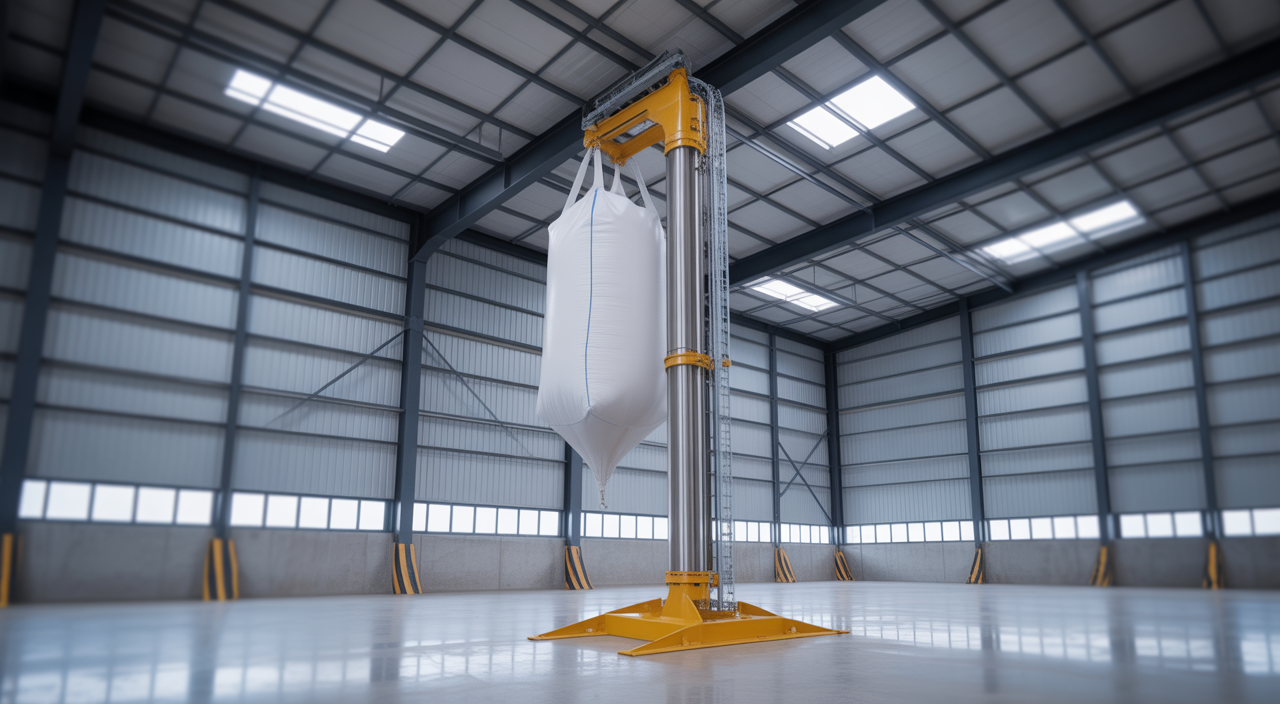
What exactly is a bulk bag column lift?
A bulk bag column lift is a vertical lifting system designed to raise, position, and sometimes rotate large industrial bags, often called FIBCs or big bags. It holds the bag securely, lifts it to a set height, and lets you discharge or fill material in a controlled way. This makes handling powders and granules safer, cleaner, and more efficient in busy plants.
Modern plants across food, chemical, and pharma sectors use a bulk bag column lift as part of a wider bulk bag handling system that may include bag filling, unloading, and dust control. For Indian investors, this single piece of equipment can unlock higher throughput without having to expand floor space. It also helps standardise handling across shifts, which is important when labour skills vary.
If you already run automatic filling machines or bag discharge stations, the right column lift can act as the missing link between manual handling and a fully automated, ergonomic material flow.
How does a bulk bag column lift work?
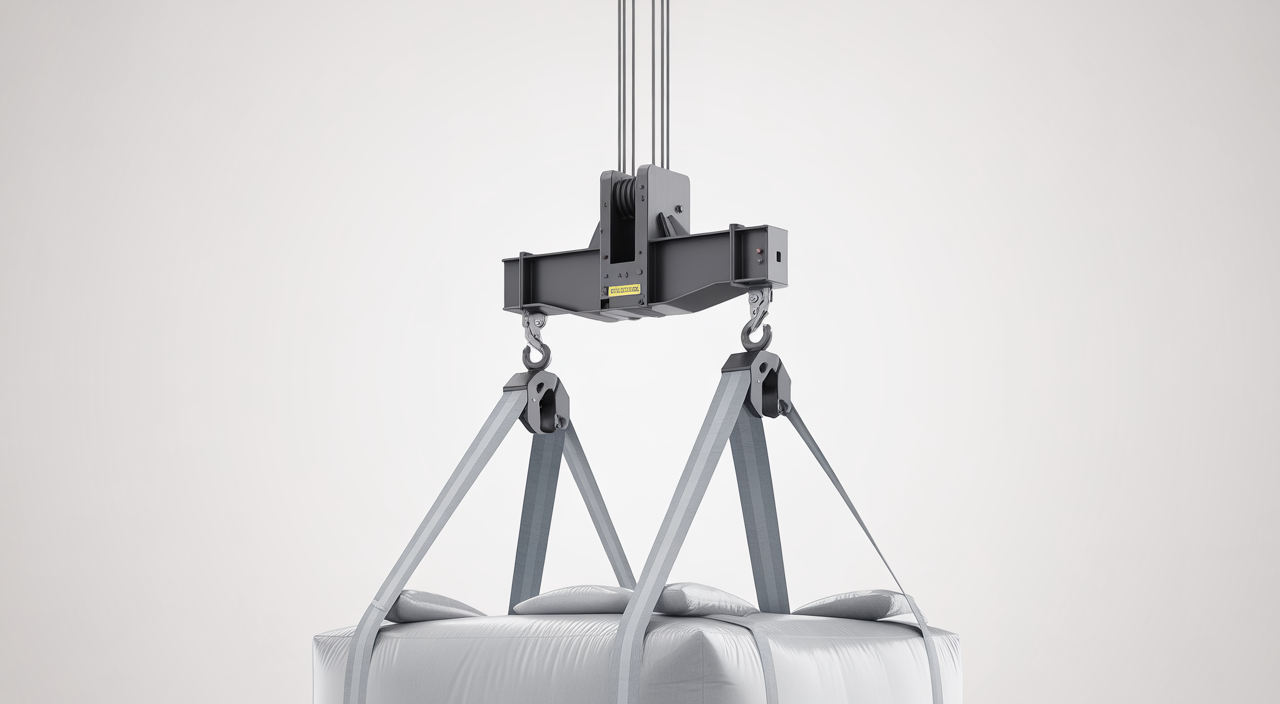
At its core, a column lifter is a tall steel structure with a lifting carriage that travels up and down. The bag is attached to a frame or hook system on the carriage using the bag loops. A drive unit, usually electric or hydraulic, moves the carriage vertically along the column.
Once the bag is lifted, it can be aligned with a receiving point such as a hopper, mixer, or bag filling column lift. Some systems use pneumatic bag support to keep the bag in the right shape for smooth material flow. Advanced units integrate with sensors and control panels so that the lift movement, discharge valves, and dust control unloading equipment all work together.
There are two broad types of column lifters in the market today.
- Manual or semi-automatic lifters: Operators use push buttons, pendant controls, or a basic control box. These are cost-effective and suitable for low to medium throughput.
- Fully automated column lifters: These tie into PLCs or plant-wide automation. They can run pre-set recipes, position bags accurately, and link with an automatic bulk bag dispenser or bag loader.
Key benefits for modern plants
For Indian facilities upgrading from forklifts or chain blocks, a column lifter brings very tangible gains.
- Better safety: Bulk bag lifter safety is a major concern. A guided column reduces swinging loads, bag drops, and manual strain. Guards, interlocks, and limit switches help you meet global safety norms.
- Higher throughput: With repeatable lift cycles, you cut waiting time and reduce dependence on forklift availability. This leads to more predictable production and smoother shift planning.
- Dust control: When paired with a well-designed bulk bag discharge station, the column lift holds the bag steady so spouts and seals work properly. This limits dust, keeps the plant cleaner, and protects worker health.
- Space efficiency: A vertical lifting solution reduces clutter on the shop floor. This is valuable when land and shed expansion are costly, as in most Indian industrial areas.
What to look for when choosing a bulk bag column lift
Selecting the right model is less about buying the “biggest” system and more about matching it to your process. Keep these points in mind.
- Lift capacity: Check the maximum filled weight of your bags, then add a safety margin. Typical FIBC sizes range from 500 kg to 1.5 tons, but some industries go higher.
- Lift height and reach: Measure from floor to the inlet of your mixer, silo, or hopper. Ensure the platform or bag frame clears any existing structure, including pipelines and ducting.
- Bag dimensions: Column lifters should comfortably accept your standard bag footprint and height. If you use multiple bag sizes, explore adjustable frames or an industrial bag lifter design that can adapt.
- Control system integration: For automated plants, choose a model that can link with your existing PLCs and sensors. Many suppliers now support IoT in material handling, allowing remote monitoring of lift cycles, alarms, and maintenance schedules.
- Compliance and standards: Ask how the design aligns with international handling norms and guidance similar to OSHA and CEMA recommendations for lifting devices and unit handling.
Simple installation and maintenance checklist
A column lift is a long-life asset. A little planning at install stage saves many headaches later.
- Confirm floor strength and get an engineer to verify the base plate and anchor design.
- Ensure clear vertical space with no cable trays or ducts blocking the lift path.
- Install guards, safety fences, and emergency stop buttons where operators stand.
- Connect power and control cables using approved industrial fittings.
- Run initial test cycles without load, then with a test bag before live production.
For ongoing care, follow a simple monthly routine.
- Check bolts and anchor points for looseness.
- Inspect lifting chains, belts, or cylinders for wear.
- Lubricate moving parts as per the supplier’s manual.
- Test limit switches, interlocks, and safety curtains.
These steps keep your FIBC column lifter reliable and extend its service life.
Understanding ROI and total cost of ownership
Many Indian investors focus only on purchase price. It is better to look at the total cost of ownership across 5 to 10 years. A quality column lift may cost more upfront but often saves far more over its life.
You can make a simple ROI sheet in a spreadsheet with these items.
- CAPEX: Equipment price, installation, electrical work, civil work for the base.
- OPEX savings: Lower labour cost per ton, fewer operator injuries, reduced downtime, and better bag discharge efficiency.
- Quality benefits: Less product loss due to spillage, better dust-free bulk bag unloading, and cleaner output that needs less rework.
When you quantify even modest savings in each area, payback periods of 1 to 3 years are common, especially when moving from manual to automated bag handling.
Practical tips for Indian investors
Before you place an order, walk through your line and map the full bag journey from truck unloading to final discharge. Identify how a column lift will connect with equipment such as an automatic pouch filling machine or a mixer inlet. This helps you design a flow that is future-ready.
Also think about long-term scaling. If your production is likely to double in the next 3 to 5 years, choose a model that can handle higher throughput or is easy to upgrade with automation, such as load cells, bag tension monitoring, or remote diagnostics.
For a broader understanding of how smart equipment choices support business growth, you can explore resources on building robust support systems for your operations. Both IT and material handling investments follow the same logic: reliability, scalability, and safety.
FAQs
Q1. Is a bulk bag column lift suitable for small and medium Indian plants?
Yes. Even a small or medium facility that handles a few tons per day can benefit. A basic model improves safety and housekeeping, while modular designs let you upgrade to automated bag handling as volumes grow. The key is to pick a capacity and feature set that matches today’s needs with some room for tomorrow.
Q2. Can I integrate a column lifter with my existing bag filling or unloading system?
In most cases, yes. Column lifters are often designed as part of a wider bulk bag handling system, so they can align with bag filling frames, discharge hoppers, or conveyors. Talk to your supplier about connection heights, control signals, and safety interlocks so the whole line works as a single, smooth unit.
Q3. What safety features should I prioritise?
At minimum, look for mechanical stops, load-rated lifting components, emergency stops, and safety interlocks on access doors. If your plant handles fine powders, add dust extraction and proper spout sealing to protect operators. Regular training and clear SOPs are just as important as the hardware itself.

Martin Evans is a tech specialist with 10+ years of experience in software engineering, data analytics and digital transformation. He currently works as Senior Software Engineer for a leading IT solutions company in England. Martin has a passion for programming and loves staying up to date with the latest technology trends. He specializes in developing custom software solutions and is experienced with everything from front end to back end engineering practices.