
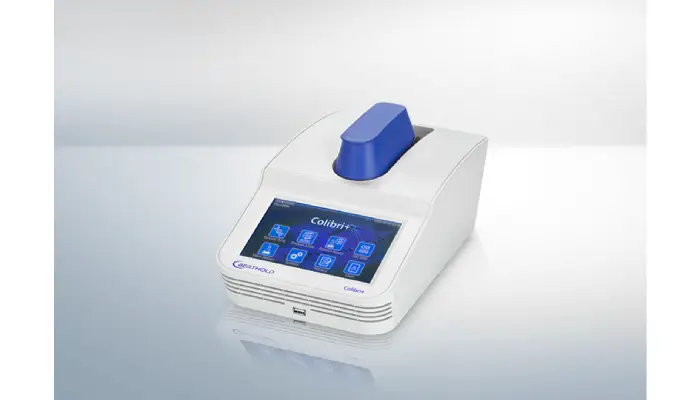
In the fast-paced world of scientific research and drug discovery, efficiency is key. Enter assay automation, a game-changing approach that streamlines laboratory processes and enhances productivity. Imagine reducing manual labor while increasing accuracy—this is what assay automation promises to deliver. But what exactly does it entail? And why should professionals in the life sciences care about this technological advancement? Prepare to dive into the fascinating realm of assay automation, where precision meets innovation, transforming how we conduct experiments and analyze data. Whether you’re a seasoned researcher or just starting your journey in science, understanding assay automation could be pivotal for your work’s success.
The Benefits of Assay Automation
Assay automation offers numerous advantages that can transform laboratory operations. One of the most significant benefits is efficiency. Automated systems streamline workflows, reducing the time needed for sample analysis.
Increased accuracy is another compelling reason to embrace assay automation. Human error is minimized as robotic systems execute repetitive tasks with precision, leading to more reliable results.
Cost-effectiveness plays a crucial role, too. By speeding up processes and optimizing resource allocation, labs can significantly cut operational costs over time.
Moreover, automated assays allow scientists to focus on high-level research instead of mundane tasks. This shift boosts overall productivity and innovation within research teams.
Consistency in results becomes achievable through automation. Repeated measurements yield uniform data sets essential for valid conclusions in scientific studies.

Types of Assays that Can Be Automated
Assay automation spans a wide range of applications across various fields, primarily in drug discovery and clinical diagnostics.
High-throughput screening assays are among the most common types automated. They enable researchers to test thousands of compounds quickly, facilitating faster lead identification.
Enzyme-linked immunosorbent assays (ELISAs) also benefit from automation. Automated systems enhance precision by minimizing human error during sample preparation and data analysis.
Another category includes PCR (polymerase chain reaction) assays, which can be streamlined for rapid DNA amplification. Automation ensures consistent temperatures and times, yielding reliable results.
Cell-based assays such as cytotoxicity tests have also seen significant advances through automation. These systems allow for real-time monitoring of cell behavior under varying conditions.
Each assay type brings unique challenges but offers substantial rewards when automated effectively. The versatility in assay selection makes it an exciting area within laboratory research.
Common Techniques Used in Assay Automation
Assay automation employs various techniques to enhance laboratory efficiency. Liquid handling robots are among the most popular tools. They accurately dispense reagents, minimizing human error while speeding up the process.
Another common technique is plate readers. These devices can analyze multiple samples simultaneously, providing quick and reliable data on absorbance, fluorescence, or luminescence levels. This capability significantly reduces turnaround times.
High-throughput screening (HTS) systems also play a crucial role in assay automation. HTS allows researchers to test thousands of compounds against biological targets in record time, accelerating drug discovery efforts.
Data management software integrates with these automated systems for seamless analysis and reporting. It helps in tracking results and maintaining compliance with regulatory standards, ensuring that laboratories operate smoothly.
Together, these techniques create a robust framework for modern assay processes. The combination of speed and accuracy makes them indispensable in today’s research environments.
Challenges and Solutions in Implementing Assay Automation
Implementing assay automation can present several challenges. One of the most prominent issues is the initial cost. High-quality automated systems require significant investment, which may deter smaller labs.
Another hurdle is staff training. Transitioning from manual to automated processes necessitates a shift in skill sets. Employees must understand both the technology and its application in their workflows.
Data integration poses another challenge. Existing systems might not be compatible with new automation tools, leading to potential disruptions in operations.
Solutions exist for these obstacles. Partnering with vendors that offer comprehensive training programs can ease the transition for staff members. Additionally, selecting modular automation solutions allows labs to scale gradually without overwhelming costs or infrastructure changes.
Collaborative planning between IT and laboratory teams ensures seamless integration of new technologies into existing frameworks, minimizing disruption while maximizing efficiency gains over time.
Real-life Examples of Successful Assay Automation
A prominent example of successful assay automation can be found in the pharmaceutical industry. A well-known biotech company streamlined its drug discovery process by automating high-throughput screening assays. This shift allowed them to analyze thousands of compounds rapidly, expediting lead identification.
In academia, a research institute adopted automated liquid handling systems for genetic analysis. By reducing human error and increasing reproducibility, their research output dramatically improved. They could focus on interpreting results rather than manual pipetting.
Another case is in clinical diagnostics. A major lab integrated robotics for processing patient samples in serological assays. This not only increased throughput but also enhanced accuracy, leading to faster diagnosis times.
These examples illustrate how various sectors are harnessing assay automation technology to achieve greater efficiency and innovation, setting new standards within their fields.
The Future of Assay Automation
Advancements in assay automation are poised to revolutionize laboratory processes. As technologies evolve, we can expect more sophisticated robotic systems and AI-driven software that enhances accuracy and efficiency.
Integration with big data analytics will enable researchers to sift through vast amounts of information rapidly. This capability could lead to quicker breakthroughs in drug discovery and diagnostics.
Moreover, miniaturization techniques may pave the way for highly efficient micro-assays. These compact solutions require fewer reagents and samples while delivering precise results.
Collaborative robotics is also on the horizon. Human-robot partnerships can streamline workflows, allowing scientists to focus on complex problem-solving rather than routine tasks.
As industries adapt, regulatory frameworks will likely evolve as well. Keeping pace with technological advancements ensures safety without stifling innovation. The future of assay automation looks promising, bringing us closer to unprecedented scientific achievements.
Conclusion
As the landscape of biotechnology and pharmaceutical research continues to evolve, assay automation stands out as a pivotal element driving innovation. By streamlining processes, enhancing data accuracy, and increasing throughput, this technology has transformed how laboratories operate.
With advancements in robotics and machine learning, the potential applications for assay automation are expanding rapidly. Researchers can now focus more on interpretation and discovery rather than manual tasks that consume valuable time.
Organizations that have embraced this shift report significant improvements in operational efficiency and cost-effectiveness. As challenges arise in implementation, such as initial setup costs or training needs, the long-term benefits often outweigh these hurdles.
The future of assay automation looks promising, with continuous technological advancements set to further improve capabilities. Whether for drug discovery or diagnostics development, integrating automated assays into workflows is becoming increasingly essential.
Moving forward, those invested in scientific progress will likely find themselves navigating an environment where assay automation not only enhances productivity but also drives groundbreaking discoveries across various fields. The journey towards fully automated labs is just beginning, and it promises exciting possibilities ahead.

Martin Evans is a tech specialist with 10+ years of experience in software engineering, data analytics and digital transformation. He currently works as Senior Software Engineer for a leading IT solutions company in England. Martin has a passion for programming and loves staying up to date with the latest technology trends. He specializes in developing custom software solutions and is experienced with everything from front end to back end engineering practices.